
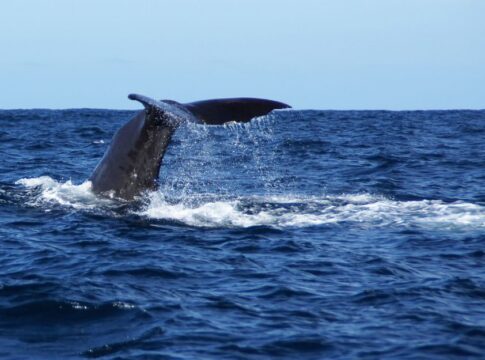
Four sailors survived 18 hours adrift in the South Pacific after a sperm whale struck their 52-foot yacht, tearing gashes in the hull and sending the vessel to the ocean floor. The crew activated emergency beacons, fought rising water for hours, then escaped to a life raft before a container ship plucked them from the sea 250 nautical miles north of Norfolk Island.
The Collision and Desperate Fight
Australian Jemma Cooper was steering the Tai Tam when the impact threw her from the wheel. A pod of six to eight sperm whales surrounded the yacht as brown discoloration spread through the water. Her husband Jeremy Cooper, sleeping below deck, awoke to find the starboard steering gear destroyed and water pouring into the hull. The crew issued a mayday call 30 minutes after impact and began bailing water by hand.
French crew member Martin Jaffre dove beneath the boat to inspect damage while battling the flooding with expansion foam and makeshift repairs. The whale strike cracked the fiberglass structure and destroyed the steering system, leaving the vessel uncontrollable. New Zealand crew member Terry Hetherington helped coordinate the emergency response as the Royal New Zealand Air Force dispatched a patrol plane to establish radio contact and guide rescue operations.
Abandoning Ship Under a Full Moon
The sailors clung to their yacht until late Saturday night, then transferred to a life raft in calm seas illuminated by a full moon. In the early Sunday morning hours, they cut the tether connecting them to the sinking yacht, fearing it would drag their life raft down. Military drone footage captured the moment the Tai Tam disappeared beneath the waves, ending what had been a Pacific holiday voyage.
The container ship MV Sofrana Surville reached the crew at 6 a.m. Sunday. Jeremy Cooper described the 470-foot vessel’s approach toward their tiny raft as frightening, but within 30 minutes all four sailors had climbed aboard to safety. Mike Clulow of the Rescue Coordination Centre praised the crew’s preparation and quick activation of their emergency beacon as lifesaving decisions.
Vulnerable Giants of the Deep
Adult male sperm whales stretch 50 to 60 feet long and reproduce only once every five to seven years. The International Union for Conservation of Nature classifies them as vulnerable due to population decline from noise pollution, plastic consumption, and ship strikes. The collision highlights ongoing risks faced by both mariners and these endangered marine mammals in open waters where human activity increasingly overlaps with whale migration routes and feeding grounds.