
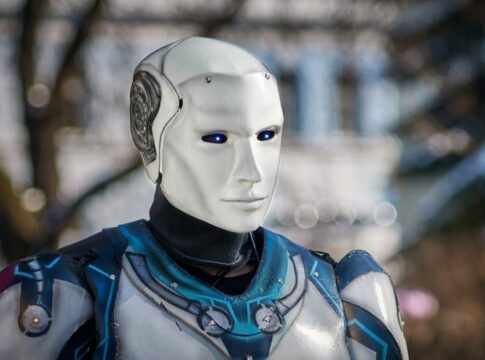
A San Diego charter school spent half a million dollars on two ChatGPT-powered humanoid robots for classroom instruction, drawing sharp criticism from students who describe them as creepy and from education researchers who call the experiment complete nonsense.
Expensive Experiment Falls Flat With Students
Altus Charter School purchased two Ameca robots at $500,000 to serve as wellness coaches, teachers, college planners, and translators. The school positioned itself as the first in the world to research physical AI as a teaching partner. During demonstrations, middle school students struggled to interact with the machines, which spoke too quickly and required frequent repetition. Sessions were marked by awkward pauses and interruptions that forced students to ask questions multiple times just to complete their notes.
When asked to describe the robots in three words, students most commonly chose creepy as their first impression. The school’s dean of academic studies, Cathryn Rambo, acknowledged sessions were clunky but defended the pilot program as an innovative research-based learning experience. She told parents the school would continue learning what Ameca could do, despite not understanding its full capabilities even after six weeks of use.
Researchers Condemn the Investment
Education experts delivered scathing assessments of the robot teachers. Wayne Holmes, a professor specializing in artificial intelligence and education at University College London, stated there is no independent evidence at scale that these tools are effective, safe, or provide positive classroom impact. He called the suggestion that robots could approach the capabilities of human teachers criminal, describing the attempt to use them for teaching English and vocabulary as utter nonsense and a parody of education.
Neil Selwyn, a Monash University professor who has spent years researching technology integration in classrooms, used even stronger language. He called the physical robot presence complete spectacle and charade, noting that humanoid robots cannot match teacher sentience and create unnecessary distractions where so much can go wrong.
Taxpayer Money and Educational Priorities
The half-million-dollar expenditure raises questions about educational spending priorities and accountability. School officials insist they are not replacing staff with robots, but the significant investment comes as many schools struggle with basic funding needs. Students are instructed to fact-check information the robots provide, revealing fundamental limitations in the technology’s reliability for educational purposes. The experiment continues despite widespread skepticism from both its intended users and academic experts.
Teachers do not want to accept their potential replacements They pushed for Civic closure because of perceived risk but robots end that excuse. Recorded/video courses demonstrate ability to effectively replace.